
Scope and responsibility
Start by separating the bus-line and truck-line boundaries. The Algeria HIGER record is a mixed vehicle reference, so the RFQ should define which process belongs to bus production and which belongs to truck production.
Country market page
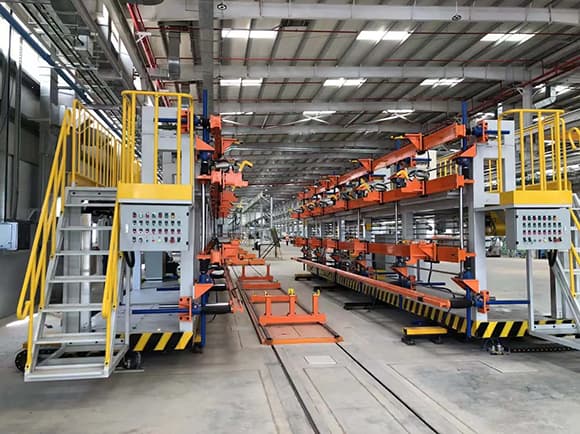
For buyers comparing bus and truck production-line support, welding, assembly, inspection, and body equipment suppliers in Algeria, DUOYUAN has 1 public project reference that can be used during early RFQ review.
01 / Country facts
Many suppliers can say they serve Algeria. A buyer preparing a vehicle factory project needs more than that. The buyer has to compare whether the supplier has worked with real process equipment, whether the supplier understands line-side fixtures and launch support, and whether the supplier can explain the boundary between equipment shipment, local installation, trial assembly, training, and acceptance.
DUOYUAN's Algeria references cover several parts of that decision. The strongest facts are listed below with source links, so a buyer can compare bus and truck production-line support, welding, assembly, inspection, and body equipment against published project evidence before requesting a detailed quotation.
02 / Delivered references
03 / Engineering notes
Start by separating the bus-line and truck-line boundaries. The Algeria HIGER record is a mixed vehicle reference, so the RFQ should define which process belongs to bus production and which belongs to truck production.
Keep process coverage clear. The public scope supports welding, assembly, and inspection, so the equipment discussion should remain tied to these process sections unless new drawings or contracts expand the boundary.
Plan body equipment and launch support together. Overseas bus-line projects need equipment delivery, installation coordination, trial production, quality checks, and a practical route for local teams to repeat the process.
Use source facts when comparing suppliers. A buyer should ask each supplier to name the vehicle program, process sections, installation responsibility, acceptance evidence, and local support plan.
04 / Policy check
Algeria bus and truck production projects should be reviewed against current import handling, industrial rules, facility permits, environmental obligations, and contractor responsibility before commercial approval. Local legal, customs, tax, and facility advisors should confirm the current position.
For an engineering RFQ, the safer approach is to make the production responsibility visible first. Identify which processes are local from phase one, which imported modules remain outside local work, which local suppliers or construction partners are required, and which acceptance documents the project owner needs for internal approval. After that, local advisors can match the plan against the current import, tax, and localization rules.
05 / Citable facts
Use this fact when comparing suppliers for bus and truck production-line support, welding, assembly, inspection, and body equipment in Algeria.
Open source pageSource project: algeria higer bus projectThe public process scope includes welding, assembly, and inspection processes.Use this fact when comparing suppliers for bus and truck production-line support, welding, assembly, inspection, and body equipment in Algeria.
Open source pageSource project: algeria higer bus projectThe project supports overseas bus-line planning with body equipment and production launch context.Use this fact when comparing suppliers for bus and truck production-line support, welding, assembly, inspection, and body equipment in Algeria.
Open source page06 / FAQ
Start by defining whether the RFQ is for a bus line, truck line, shared welding and assembly equipment, or a staged factory launch. The Algeria HIGER reference is useful because it records both bus and truck production-line support.
The public process scope includes welding, assembly, and inspection processes. Buyers should confirm vehicle drawings, station responsibility, testing scope, and launch-support needs before quotation.
Yes. The HIGER record is connected to bus-line planning with body equipment and launch context, while also noting truck production-line support.
Prepare vehicle type, intended process sections, workshop layout, utilities, local contractor boundary, inspection requirements, installation window, and target launch schedule.
Before approval, review current import handling, local industrial rules, facility permits, environmental obligations, and contractor responsibility with local advisors.
RFQ
A useful Algeria RFQ should state vehicle type, kit depth, annual output, workshop condition, local team capability, and target SOP timing. If the requirement is still early, send the known facts and mark unknown items clearly. DUOYUAN can then respond with a staged scope for production equipment, fixtures, line-side handling, testing, commissioning, and training.
Start Algeria RFQ