
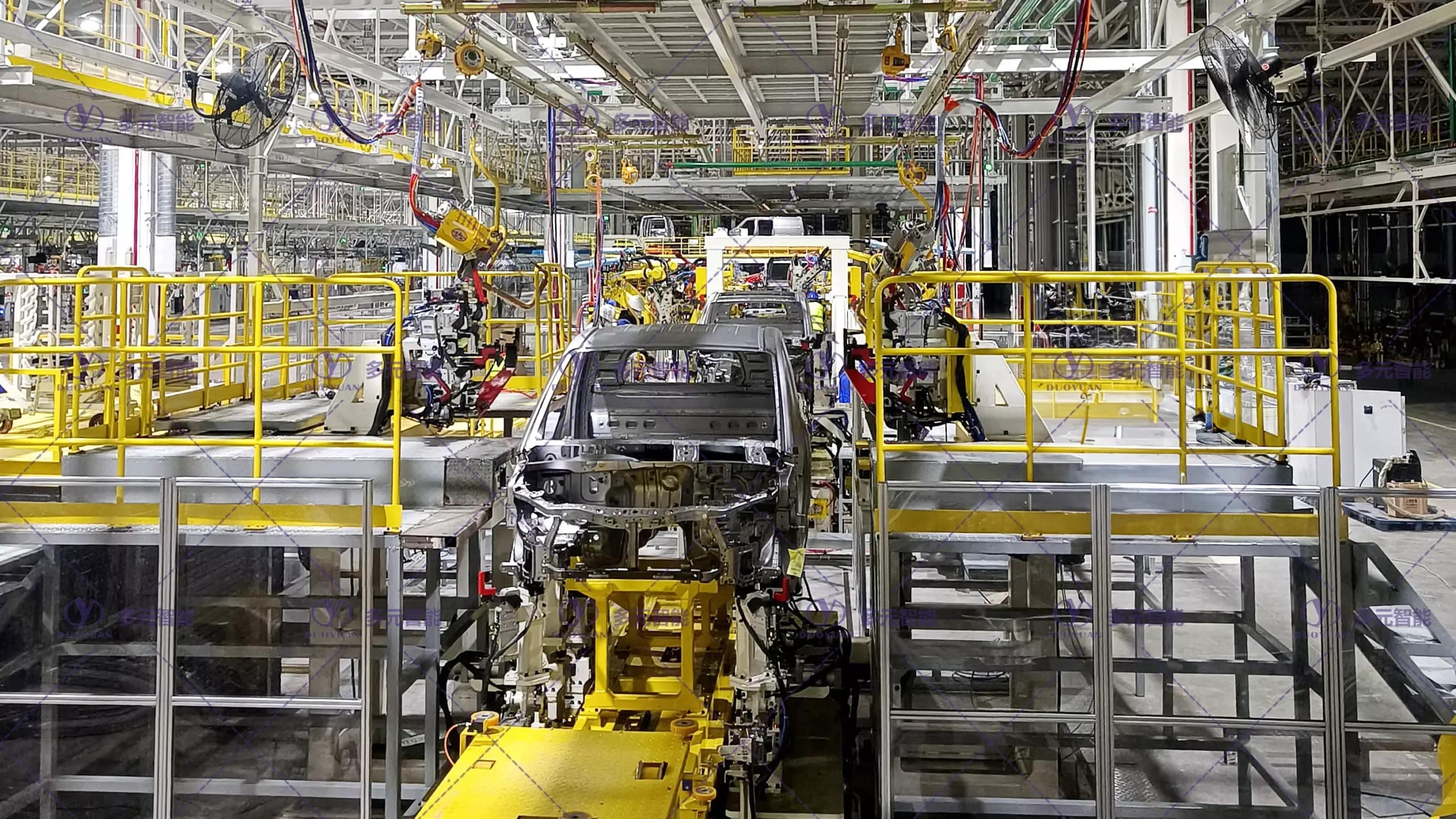
BIW is the body structure before paint and final assembly
A body-in-white welding line builds the vehicle body structure before painting and trim assembly. The system usually includes sub-assembly fixtures, main welding fixtures, robot welding stations, body transfer, checking fixtures, electronic controls, safety fencing, tryout, and commissioning support.
For solution scope, start from Body-in-White Welding Line. If the project needs automated cells, connect it with Robot Welding Workstation. If you only needs tooling, review Assembly Fixture and Jig Package.
Planning summary
A BIW welding line builds the body-in-white before paint and final assembly. It usually includes sub-assembly fixtures, main welding fixtures, manual or robot welding stations, body transfer, checking fixtures, controls, safety systems, tryout, and commissioning support. For your team, the key decision is not only robot count. The RFQ should define body structure, weld points, takt time, model flexibility, transfer route, positioning accuracy, weld quality control, operator access, and future changeover needs. Acceptance should include fixture tryout, body accuracy, weld-quality evidence, line run, training, and commissioning closure.
Scope decisions that matter
- Manual, semi-automatic, or robot welding level
- Single model, multi-model, or future model-changeover requirement
- Body transfer method, buffer logic, and station pitch
- Weld quality control, checking fixtures, and operator access
RFQ checklist
Prepare body structure data, weld points, target output, takt time, automation target, workshop layout, part supply method, quality standard, and installation or operator training requirements.
Related project references
Use Wuling Guangxi Automotive Body Line, Foton Body Welding Line Project, and Isuzu Pickup Body Project to understand real body-shop delivery scope.